A website for a local business: what should come first
For a local business, discovery happens on the Google map and the website confirms the decision. The right order, and the role the website plays.
5 min readBy Hugo C.negócio local, SEO, marketing digital

In a Reddit thread about small businesses, someone wrote this: "I've lost count of how many times I've seen a business I was interested in, but all they had was a profile". The thread gathered 78 replies and almost all of them point to the same place, the lack of a website. The observation is right, but the conclusion people draw from it is usually wrong, because it skips a question: in what order do you build these things?
We are a studio that builds experiences on the web, and we are going to take a position that is inconvenient for our own sales. For a local business, a website is rarely the first step. It is the second.
The map discovers, the website validates
Nobody types the name of a business they do not know into Google. They type "launderette near me", "dentist in Aveiro", "pharmacy open now". Google answers with a map and three main results, the so called local pack, which is the block of local results that appears before the normal links. That is where discovery happens.
What comes next is the part that matters. The person opens one of those profiles, looks at the reviews, the photographs and the opening hours. If that convinces them, the next step is almost always the same, looking for the website. It is on the website that the decision is confirmed or lost.
These are two different jobs and neither replaces the other. A map profile with no website leaves the person halfway through the decision, which is exactly the complaint in the Reddit thread. A website with no map profile waits for visits that never arrive, because nothing in local searches points to it.
What should come first
The Google map profile, complete and with real reviews. It costs nothing, it is live the same day, and it is where the searches from people who already want to buy end up.
Add as much information as possible: the right category, the address, up to date opening hours, the phone number, and photographs of the space taken with some light. Google's own official help pages state that profiles with complete and accurate information are more likely to show up in local results. Most of the profiles we see have three fields filled in and one photograph from 2019. It is a few hours of work and nobody does it.
After that, and only after that, the website.
Reviews are the part the business controls
The map ranks results by relevance, distance and prominence, which is the name Google gives to how well known a business is. Relevance depends on the profile describing clearly what the business does. Prominence comes in large part from reviews, and it counts how many there are, how regularly they come in, and what their text says.
Asking for reviews is the hard part. Messages sent days after the service work badly, because the person has already left the moment when they were happy. What works is asking there, at the counter, while the customer is still in front of you. A Google review plate solves the mechanical part, the customer holds their phone near it and the review form opens on its own, with nothing to look for. The human part still belongs to whoever is serving, which is to ask.
This article does not go further into that topic. What stands is the order: the profile and the reviews build discovery, and it is on that discovery that the website works.
So when does the website come in
It comes in the moment someone has already decided to consider the business. They arrive from a review they read, from a friend's recommendation, from a card, from an ad. They reach the website with one question in mind, is this serious and is it for me?
That is why the order matters. A website for a local business is not there to generate demand. It is there to convert demand that already exists.
What a website for a local business actually has to do
There are four principles, and most websites fail at least two of them.
Say what you do and where, on the first line. "Self service launderette in Aveiro, open every day" says more in ten words than a whole page about values.
Prove it with real photographs. The space, the team, the work done. A stock photograph of a clinic that is not yours takes credibility away instead of adding it, and people recognise these images almost every time.
Make contact trivial. A phone number that dials with one tap, an address that opens in the map, a short form. Every extra field in a form costs you replies.
Load fast on a phone. Local searches happen out on the street, often on a weak connection. A 15MB background image sinks LCP, the metric Google uses to measure how quickly a page shows its main content, and speed metrics count towards ranking in search.
What usually goes to waste
Corporate pages nobody opens, carousels at the top that nobody lets run past the first slide, and a blog created with two articles in 2022. A website for a local business with five well made pages beats a website with twenty pages left unfinished, and it is cheaper to maintain.
What we have seen happen
For instance, we have already built websites for a launderette, a restaurant, a local pharmacy and a dental clinic. Different businesses with the same pattern: the client arrives through the map or through someone who recommended them, and the website is where the decision closes. In the cases where the Google profile was alive, with reviews coming in regularly, traffic to the website was constant, new interested users every day. In the cases where the profile was abandoned, the website stagnated, with no traffic.
Where we stand
A local business should first put time into the Google profile and into a system for asking for reviews, not into a website. A local business that already has a live profile and still has no website is losing decisions every day, and at that point the website becomes the highest return investment available.
Our position may cost us projects in the short term. But it saves difficult conversations six months later, when a beautiful website brought in no enquiries because nothing pointed to it.
Sources
Recommended articles.
4 min read
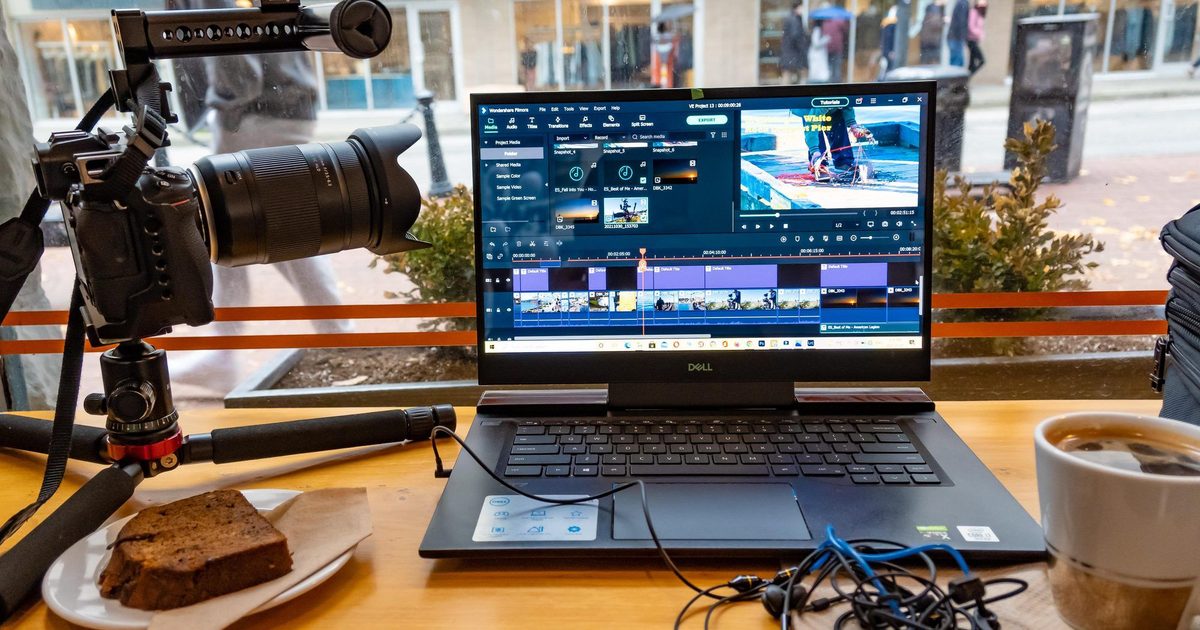
Video in digital marketing: what changes on a professional website
What a professional video changes in a website's digital marketing: perception, conversion, SEO, and how Google reads the page.
11 min read
The European Accessibility Act reached online shops: what fails in practice
The European Accessibility Act has applied to online shops since June 2025. We show what fails on Portuguese websites and where to start fixing it.

6 min read
5 of these images are real, 5 were generated by AI. Can you tell?
A quick test, and the explanation of what separates an image that feels real from one that feels synthetic. Spoiler, the secret isn't AI.


